
Building Teams of Autonomous People, Beyond Just Automated Systems
As artificial intelligence transforms modern workplaces, building teams of autonomous and curious humans is just as critical as deploying automated systems. Six-time founder Eric Francia explores why hiring for inquisitiveness and granting real responsibility drives business success.


By Eric Francia
How do you react when a junior staff member challenges your traditional methods? Do you dismiss their feedback as mere naivety with an eye-roll, or do you entertain their inquisitiveness?
Because artificial intelligence has democratized access to information on an unprecedented scale, businesses are operating with greater speed and leaner staff. Tasks that previously demanded months and large departments can now be accomplished by small groups in a matter of days.
Autonomous systems are undeniably transforming modern work. Within the agile, compact teams of tomorrow, selecting the right people to steer your AI tools will determine whether a company succeeds or fails.
Drawing on my experience as a six-time founder, I have found that the finest work environments normalize questioning the status quo. Below is my approach to assembling a workforce that challenges instructions just as readily as it follows them.
AI by design
The concept of “AI by design” extends beyond deploying the proper autonomous software; it requires fostering autonomous humans. You must place equal confidence in the human “in the loop” and the technology itself. Ultimately, your team shapes the enterprise in ways outside your direct control, making it vital to surround yourself with individuals capable of making sound choices in your absence.
Job roles are shifting in nature. By the time you identify a candidate, the actual position may look entirely different from the initial posting, and a six-month strategic roadmap can become obsolete before you finish drafting it.
According to the World Economic Forum, 59% of the workforce will require upskilling by 2030 due to AI’s impact on employment. Recruiting solely for a static skill set will no longer drive progress. The individuals worth backing are those capable of mastering whatever comes next.
Hire for curiosity
Curiosity is the premier attribute to look for during hiring. When reviewing resumes, I look beyond formal experience and academic qualifications to see what candidates have built independently. What projects have they initiated entirely on their own?
By recruiting for curiosity, you foster a culture where staff feel comfortable tossing around novel concepts and questioning obsolete practices. If personnel fear expressing the incorrect thought, they will ultimately withhold the correct one.
Amid a technological revolution, organizations that succeed will be those employing inquisitive minds capable of swift adaptation.
Hand over real responsibility
Staff members granted autonomy operate with greater speed. They execute superior choices because the corporate vision feels tangible to those entrusted with actual accountability for its success. Engaging workers in strategic direction integrates them deeply into the organization’s core and maintains their engagement.
Trust your personnel to recognize operational flaws. Permit staff to explore fresh concepts and revamp existing processes. Because they work closely with the product, employees often spot emerging issues ahead of management. Ensure your team possesses the independence to address these problems before they escalate.
Boredom is a big business risk
As organizations downsize, keeping existing staff becomes increasingly critical. Losing top talent carries a heavier price when your overall headcount is small.
Within a compact team, the consequences of disengagement manifest rapidly. Boredom causes gifted individuals to lose momentum and become far less inclined to tackle complex challenges.
Today’s leaders face the primary challenge of maintaining team interest and engagement. A disengaged employee is much more vulnerable to the advances of recruiters on LinkedIn.
Be sure to fund professional growth, facilitate continuous learning, and consistently foster inquisitiveness. Granting staff independence and accountability from day one prevents boredom from taking root. Embracing calculated risks and challenging outdated methods are the mental traits necessary to thrive in an evolving professional landscape.
Embrace the mindset of a beginner, and encourage your team to follow suit. That junior staff member questioning your established workflows might ultimately be your most crucial asset.
Eric Francia is co-founder and CEO of Stockholm-based Uniplay, an agent-driven, game-based learning platform. He has experience building, exiting and scaling digital companies across 70 countries. Uniplay is his sixth company to date.
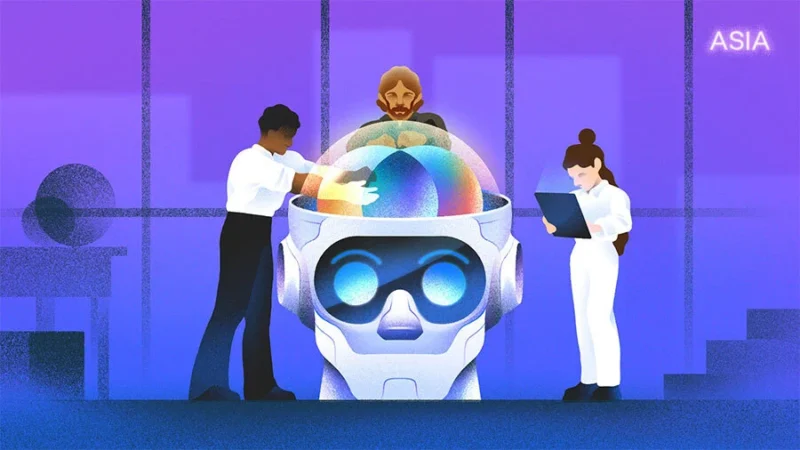
Illustration: Dom Guzman
Frequently Asked Questions
Why are autonomous humans important alongside autonomous systems?
Autonomous systems are changing how we work, but the humans directing them shape the company in ways leadership cannot always control. Trusting autonomous humans ensures smart decision-making when leadership is not present.
What percentage of employees will need to reskill by 2030 according to the World Economic Forum?
The World Economic Forum states that 59% of employees will need to reskill by 2030 as AI reshapes the workplace.
Why is curiosity considered a top hiring trait?
Hiring for curiosity creates an environment where people feel comfortable throwing around new ideas and challenging outdated methods, which helps companies adapt quickly to change.
How does giving real responsibility affect employee performance?
Employees with autonomy and real responsibility operate faster, make better decisions, feel closely connected to the company vision, and remain more engaged.
What is the risk of employee boredom in smaller companies?
Boredom makes talented people slower, less likely to tackle difficult tasks, and more vulnerable to being recruited elsewhere, which is especially costly in leaner teams.


Comments 0 responses