
HR’s AI Bias: Overvaluing Glossy Resumes and Solutions
As artificial intelligence tools make resumes and work outputs look flawless, human resources faces the challenge of identifying true talent. Employers must shift from policing AI to evaluating individual judgment, data verification, and critical thinking skills.

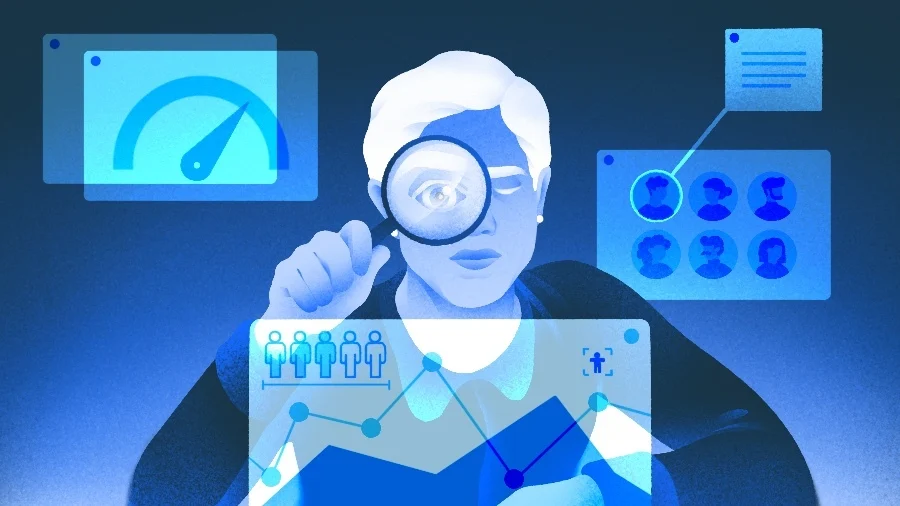
Today, virtually all professional staff utilize artificial intelligence. Candidates submit flawlessly tailored CVs that match job descriptions completely, and daily work tasks are frequently generated by tools. In this setting, the central challenge is identifying top talent and promoting the right employees when everyone appears to be an ideal match on paper.
Consider a scenario where you are hiring a financial analyst and present two finalists with the exact same AI-generated acquisition memo. The text is beautifully written and advises purchasing a company at what seems like a fair price. However, there is a catch: the model counted the same revenue twice.
One applicant simply polishes the slides, while the other requests the underlying source data, catches the mistake, and updates the recommendation. Relying solely on AI to grade a polished take-home assignment might lead you to mistakenly hire the better slide editor.
Artificial intelligence is now deeply embedded in how people search for jobs and execute their daily duties. Attempting to police that usage is a losing battle. Instead, employers benefit more by making AI usage transparent and structuring recruitment and evaluations around how individuals interact with these tools.
The better AI gets at writing résumés, the less a perfect match tells you
Indeed illustrates both sides of the hiring loop. Its Career Scout helps job hunters polish résumés, while its employer platforms review applications against specific hiring criteria. Both can save time, and résumé assistance helps qualified applicants articulate experiences they previously struggled to put into words.
Despite these benefits, such technology can also make two vastly different candidates look identically qualified on paper.
Employing an AI detector merely adds another score without answering the core question employers care about most: Can this individual actually do the job?
Recruiters can instead use AI to help draft better follow-up questions. If a candidate claims to have led an integration, an interviewer can ask them to walk through a specific decision made when two conflicting teams disagreed. The résumé secures the interview question, but the candidate’s answer provides tangible material for evaluation.
Giving everyone the same AI can make individual judgment easier to see
CoderPad offers an interview platform where candidates utilize AI on realistic tasks while interviewers observe how they prompt, evaluate, and revise the outputs. This approach gives employers a practical way to evaluate a skill professionals will increasingly need on the job.
Giving every finalist the exact same flawed acquisition memo, identical source files, and access to the same AI tools allows you to observe what they verify before passing the memo along to a client. One applicant might spot the double-counted revenue, while another might calculate whether those corrected figures alter the suggested purchase offer. The most revealing test often occurs when the tool stubbornly insists its initial calculation is correct, forcing you to see how the candidate responds.
Performance reviews should give people credit for what they catch
Lattice allows managers to use AI to draft performance reviews using goals, feedback, and meeting notes. Meanwhile, Synq, formerly Gloat, states that its software can build and run an entire review cycle from a simple, plain-English prompt. While these applications make gathering and summarizing evidence easier, they also place greater importance on the accuracy of what gets collected.
Itay Sagie, a guest contributor to Crunchbase News, is a seasoned lecturer and strategic adviser to startups and investors, specializing in strategy, growth and M&A. You can connect with him on LinkedIn for further insights and discussions.
Frequently Asked Questions
Why are standard résumés becoming less reliable in hiring?
Because AI tools help candidates generate polished résumés and 100% job-description matches, making distinct candidates look identical on paper.
How can employers fairly test candidates who use AI?
Employers can provide finalists with the exact same flawed documents and AI tools during interviews to observe how candidates verify data, prompt, and correct errors.
What is the risk of using AI detectors in recruitment?
AI detectors merely provide a score rather than answering whether a candidate is genuinely capable of performing the job duties.
How is AI utilized in performance evaluations?
Platforms like Lattice and Synq use meeting notes, goals, and feedback to draft or execute review cycles automatically.
What should performance reviews focus on in an AI-driven workplace?
Reviews should give proper credit to employees for their individual judgment and for catching errors that AI models overlook.
Related reading:
Related Crunchbase queries:
- HR, Employment And Recruiting Global Venture Funding In 2026
- Recently Funded Companies Tied To HR, Hiring And Job-Seeking
Illustration: Dom Guzman


Comments 0 responses