
Startups Choose Flexible Names to Survive Business Model Pivots
New research shows that heavily funded startups are increasingly choosing distinctive yet vague names to allow room for adaptation during inevitable business model pivots, particularly in the fast-evolving AI sector.

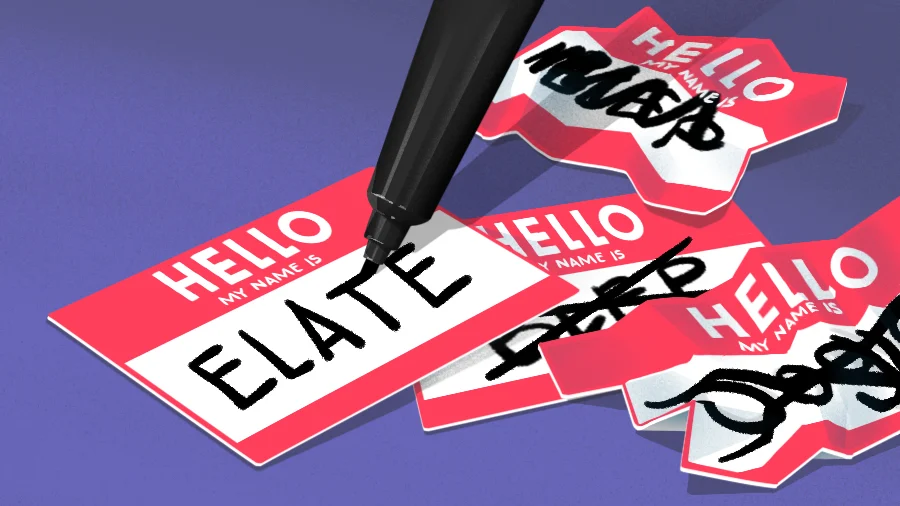
Startup naming tends to be a cyclical endeavor. For a few years, founders might be enamoured of silly monikers, made-up words, and creative misspellings. Then the pendulum swings, and startups defer to simple names that describe what they actually do.
So where are we now? Probably somewhere in the middle.
Per a Crunchbase analysis of startups 1 founded in the past three years, companies attracting investor interest are largely opting for names that are both distinctive and vague. It’s a preference that reflects this era of fast-evolving AI, in which founders want room to adapt.
Examples of this stylistic direction abound among the most heavily funded newer startups. There’s Also, which is of course a micromobility spin-out. Perplexity is a genAI company although you couldn’t tell that by its name. And then there’s Sunday, which makes household robots, in case that wasn’t clear from the name.
“Reality is a lot of these companies, in seven or eight years they’ve done at least one or two major pivots,” Athol Foden, who runs the naming consultancy Brighter Naming, told us. That makes it logical to pick a name that can still work afterward.
Running out of names
When startups do make inventive picks, it’s often out of necessity rather than preference.
“We’re running out of words. Everything is trademarked multiple times over,” said Bruno Benedini, co-founder of branding consultancy Taillight. “So we have to look for something unexpected.
Given that reality, Benedini is always on the lookout for startups that exemplify the element of surprise. One standout is Hugging Face, the AI model sharing and development platform, which Nvidia agreed to acquire for $12.9 billion in September. It didn’t succeed just because of its strange name, obviously, but it didn’t hurt.
Another more recent upstart that caught his attention is Flapping Airplanes, an AI research lab that raised a $1 billion Series A last month.
“It’s super playful, but you remember it, and you have this visual,” he said. Plus, it’s not the kind of name one’s lawyer finds is already taken by a competitor.
Building and industry
The AI boom is also often characterized as a period in which companies are building the foundational layer of a technology that will fundamentally transform our lives for decades to come. Given this mindset, it’s perhaps predictable that we’re seeing a plethora of names with themes tied to building and industry.
Foden points to Databricks as one of the more longstanding representatives of this naming approach. Its brand evokes the notion of digital data as one small component of a massive building endeavor.
But newer upstarts are onto this trend as well. There’s an abundance of recently founded companies with “foundation” in their name, for instance, including Foundation Health, Foundation Industries, Foundational Industries, Foundational and Foundation.
Another recent example with an industrial, maker vibe is Blacksmith, a cloud infrastructure startup founded in 2024 that’s pulled in more than $100 million this year.
Dating app Rivet looks like a more unusual sector match for an industrial name. The two-year-old startup runs a platform in which volunteer matchmakers pick matches for daters.
Nuclear startup Standard Nuclear, meanwhile, reads like a twist on Gilded Age industrial giant Standard Oil.
Humanizing AI
There’s also a continuing effort to add a humanizing element to AI and robotics technologies. After all, no one wants to patronize a company called “AI-Enabled Robotics Overlord Who Will Soon Be Taking Your Job.”
It’s not just newer startups applying this tactic. Startups have a long history of going with popular first names as brands. And of course Anthropic has secured massive market share of late with a chatbot and coder named Claude.
Newer funded startups with first name-based brands include Theo, Henry, Clara and Mira, among others. Then there’s Humans&, an AI startup that’s taking a different route to attempt a humanizing brand.
AI-generated names
Of course, nowadays it’s not even necessary to confer with a human when generating naming ideas. You can just ask AI for suggestions.
Per Benedini, the technology’s not there yet.
“We still use AI to see what it comes up with, and it’s like 99% garbage,” he said. Moreover, selecting a name is only the first step — one must also determine if it’s available for use.
Still, it’s early days. Perhaps in the future it will be AI naming AI companies to appeal to other AI agents. But hopefully there will still be a role for us to play going forward.
Related Crunchbase query:
- Sample Companies For Naming Analysis
Related reading:
- From Weird To Boring: A Quick Trip Through The Recent History Of Startup Naming
- Startups Names Stay Strange As Bad Spelling Proliferates
- Why Do Health Care Startups Have The Same Names As My Human Friends?
Illustration: Dom Guzman
-
Sample set was limited to startups in English-speaking countries. ↩
FAQs
Why are funded startups choosing distinctive yet vague names?
Because many companies undergo one or two major pivots within their first seven or eight years, founders prefer names that will continue to work even if their original business model changes.
What is an example of an unexpected startup name driven by trademark scarcity?
Branding experts point to Hugging Face, an AI model sharing and development platform, and Flapping Airplanes, an AI research lab that raised a $1 billion Series A.
Why are industrial and building-related names common among recent startups?
The current AI boom is viewed as building the foundational layer of a technology that will transform life for decades, inspiring names tied to building and industry, such as Databricks, Foundation Health, and Blacksmith.
How are startups trying to humanize AI through their branding?
Companies are increasingly using popular first names as brands—such as Claude, Theo, Henry, Clara, and Mira—or names like Humans& to make AI and robotics feel more approachable.
Can AI be used effectively to generate startup names today?
According to branding consultant Bruno Benedini, current AI-generated name suggestions are mostly unusable, with him noting they are “like 99% garbage,” and founders still face the challenge of checking trademark availability.
Comments 0 responses