When Minimum Viable Products Fail to Solve Massive Startup Issues
When minimum viable products fail to solve massive startup issues like complex compliance, seasoned founders turn to maximum viable products, leveraging past exits and advanced language models to tackle monumental challenges from day one.


An initial venture typically adheres to a well-trodden blueprint: identifying a market gap, refining the pitch and concept obsessively, and eventually reaching the absolute conviction that the solution is both revolutionary and bulletproof.
Then comes the grueling phase of product-market fit. Rather than reshaping an entire industry, founders frequently find themselves forced to hone in on a single, narrow use case, spending crucial early years demonstrating that their concept can scale and turn a profit. The grand vision gets sidelined.
For the majority of founders, this path is the only option. Investors are taking a gamble on someone who has never launched a company before, meaning a small initial check and a limited product restrict the potential downside for everyone. Yet, certain ambitions demand total commitment right from the outset, and having a prior company under your belt makes taking on those challenges much more manageable.
Lessons from the front line
Following the 2022 sale of my first company, Tink, to Visa for €1.8 billion (roughly $1.9 billion USD), I found myself in a completely new situation—and it didn’t involve lying horizontally on a sun lounger. My co-founder, Fredrik Hedberg, and I possessed a genuine financial war chest along with a fresh entrepreneurial itch. For the first time, we had both the resources and the experience required to tackle a truly world-changing endeavor.
Any founder is painfully familiar with compliance as a bureaucratic gauntlet. While scaling Tink throughout Europe to 700 employees managed by multiple regulators, my team and I grew accustomed to pulling our hair out over minor phrasing adjustments, reviews lasting months, and continuous uncertainty that hindered bold, rapid iteration. Products were frequently delayed by months—a critical slip in an industry moving at lightning speed.
A problem with too many heads
Compliance proved to be a challenge that could never be tackled piece by piece. A company’s regulatory obligations rely on millions of distinct variables, each isolated within separate departments that rarely communicate.
Legal monitors regulations while another division oversees implementation. Product teams make their own decisions regarding features, and yet another group opens a case to verify compliance. Standards, policies, and regulations belong entirely to separate departments, which typically represent the exact organizational silo that a compliance startup builds for—offering a clear budget and buyer.
“Solving compliance” resembled battling the mythical Hydra: severing one head only causes two more to sprout. A minimum viable product simply cannot work here; fixing a single head changes nothing. Instead, it demands a maximum viable product from day one.
Why the second time is different
Recent years have brought forth several inspiring instances of seasoned founders returning to tackle new hurdles. Stockholm is very familiar with this trend: alumni from Klarna and Spotify have launched and funded numerous new enterprises, leveraging the credibility gained from their initial triumphs to pursue more difficult challenges.
During a second venture, capital and access come much more naturally. A successful initial exit opens doors to partners, talent, and investors that were previously unavailable to us during the days of Tink. It represents an incredible opportunity for which I am deeply grateful. You carry forward every lesson learned from past successes and failures, enjoying a genuine tailwind as people actively seek to back you and collaborate.
Having personal capital also means you can finance the entire build yourself, eliminating pressure from investors to downscale the concept before testing it.
Maximum viable product
In the past, capital and experience could only take you so far. A decade ago, creating something of this magnitude would still have demanded years of work and hundreds of people from diverse backgrounds. Language models have fundamentally altered that dynamic. Today, our growing team consists of 22 people, shipping products at a velocity I could only dream of back when we were first building Tink.
We also feel that enduring the bumps and bruises of our first 15 years as entrepreneurs has given us thicker skin.
You anticipate upcoming setbacks, recognizing that a startup is never a solo sprint but rather a team marathon. None of this guarantees ultimate triumph, but it provides a solid foundation if you want to stand your ground and bring your most ambitious vision to life.
Daniel Kjellén is the CEO and co-founder of Freda, the Stockholm-based AI-native compliance company that came out of stealth in September 2026. He previously co-founded the open banking platform Tink in 2012 and led it as CEO through its growth to a multimarket operation with around 700 employees before its €1.8 billion acquisition by Visa in 2022.
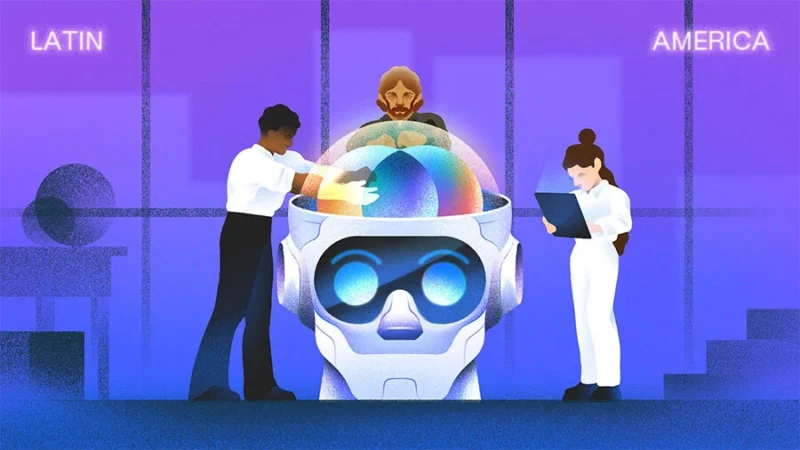
Illustration: Dom Guzman
Frequently Asked Questions
What is Freda?
Freda is a Stockholm-based AI-native compliance company co-founded by Daniel Kjellén, which officially came out of stealth in September 2026.
What happened to Daniel Kjellén’s first venture, Tink?
Tink was an open banking platform co-founded in 2012 by Daniel Kjellén, which grew to about 700 employees before being acquired by Visa in 2022 for €1.8 billion (approximately $1.9 billion USD).
Why does compliance require a “maximum viable product” instead of a minimum viable product?
Compliance cannot be solved piecemeal because a company’s regulatory obligations span multiple siloed departments and factors. Fixing just one part of the problem changes nothing, necessitating a comprehensive solution from day one.
How have language models impacted the scale of building startups like Freda?
Language models allow smaller teams to build and ship products at a much faster pace; Daniel Kjellén’s current team of 22 people ships at speeds that would have previously required hundreds of people over many years.
What advantages do second-time founders have?
Second-time founders often benefit from easier access to capital, talent, and partners, the ability to self-fund initial builds without investor pressure to shrink ideas, and valuable lessons learned from past successes and failures.

Comments 0 responses