
Data shows under 2% of 2026 venture capital went to red states
So far this year, less than 2% of all startup investment has gone to companies in post-election red states, a share that is much smaller than in years’ past due to five states shifting to purple in the most recent election.

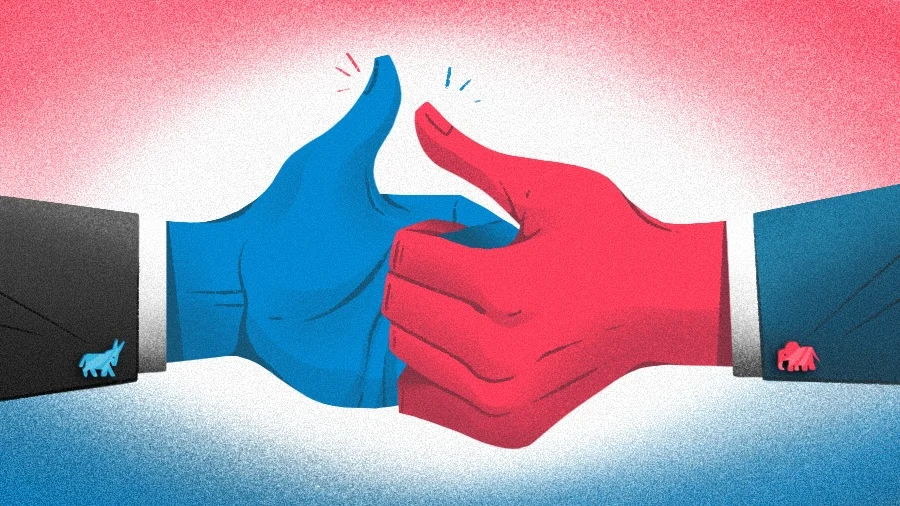
For decades, startup capital in the United States has predominantly flowed into companies located in blue or purple states, where Democrats hold all or some statewide elected offices.
Following Tuesday’s election outcomes, however, this investment disparity among blue, purple, and red states has become even starker.
Thus far in 2026, fewer than 2% of total startup investments have been directed to businesses in post-election red states, which are categorized as jurisdictions featuring both a Republican governor and a pair of Republican U.S. senators.
The portion captured by red states is significantly diminished compared to historical figures due to five states transitioning into the purple category. Among them, Texas represents the largest venture capital hub, turning purple following the election of Democratic Senator James Talarico and Governor Gina Hinojosa, followed subsequently by Ohio.
As of Election Day this year, startups operating across the remaining 17 red states1—which account for nearly a quarter of the U.S. population—amassed a collective total of just $8.6 billion in venture funding, led by contributors like Florida, Tennessee, and Utah. Put into perspective, this sum fails to match what the country typically generates nationwide during a single week.
Purple states rising
Conversely, the 10 purple U.S. states2 account for slightly over 25% of the American populace and secured roughly $28.6 billion as of Election Day. Although this figure vastly outpaces the red state total, it still accounts for under 6% of overall U.S. startup investments.
Aside from the newly transitioned Texas and Ohio, several additional purple states consistently attract substantial venture financing, such as Pennsylvania, North Carolina, and, to a degree, Wisconsin.
It is also worth highlighting that the gap separating red, purple, and blue states narrows somewhat when examining transaction counts. Approximately 12% of financing rounds valued at $1 million or greater went to enterprises in purple states, while roughly 9% were secured by red-state companies.
Generally speaking, investors continue to uncover plenty of promising talent outside blue jurisdictions when financing smaller agreements. Nevertheless, they are heavily concentrating the vast majority of their financial resources into massive artificial intelligence funding rounds benefiting companies based in California and New York.
Blue states get over 90% of startup funding
This leads directly to another key takeaway: blue states command the vast majority of startup capital, with the majority of those funds landing in California.3
Data from a Crunchbase analysis published last week revealed that California enterprises secured over three-quarters of all U.S. startup investment throughout 2026. This trend is driven largely by mega-deals for San Francisco-based OpenAI and Anthropic.
While no other jurisdiction comes close to rivalling California in investment attraction, the runner-up positions are similarly dominated by blue states, including New York and Massachusetts. Altogether, blue states have hauled in a remarkable $481 billion in startup funding this year as of Election Day, marking a new record according to Crunchbase metrics.
Politics and what makes for a venture hub
The underlying question remains: is this trend driven by politics, or is it merely a coincidence?
Generally speaking, the foundational traits defining regional startup ecosystems—such as deep technology talent reserves, metropolitan settings, prominent tech firms, and elite research universities—are not exclusive to blue states. That said, predominantly rural territories, which typically lean conservative, exhibit lower probabilities of possessing those specific elements.
Even so, nothing prevents a red state from cultivating startup success. Austin, for instance, successfully established itself as a premier tech hub while Texas remained firmly under Republican governance. Utah similarly features a sophisticated and robust startup ecosystem.
Yet, in the wake of a Democratic electoral sweep, it comes as little shock that a higher concentration of active startup hubs now resides within blue and purple territories.
Related Crunchbase queries:
- Red State Venture Funding In 2026
- Purple State Venture Funding In 2026
- Blue State Venture Funding In 2026
Related reading:
- California Startups Have Raised More So Far In 2026 Than The Entire US Ever Has In A Single Year
- Austin’s Star Is Still Shining Bright: Venture Funding To City’s Startups Hits All-Time High
- Only 2 States Saw Their Share Of US Venture Funding Rise Last Year
Illustration: Dom Guzman
Frequently Asked Questions
What percentage of 2026 venture funding went to post-election red states?
Less than 2% of all startup investment has gone to companies in post-election red states so far this year.
How are red states defined in this analysis?
Red states are defined as states that will have both a Republican governor and two Republican U.S. senators based on the November 2026 election results.
Which state commands the largest share of startup funding?
California companies have pulled in more than three-fourths of all U.S. startup funding in 2026, largely driven by mega-financings for artificial intelligence firms.
How much venture funding did purple states attract?
The 10 purple U.S. states pulled in about $28.6 billion this year as of Election Day, which accounts for less than 6% of all U.S. startup funding.
How many red states were included in the 17-state total?
Startups in the remaining 17 red states collectively pulled in $8.6 billion in venture funding as of Election Day.
-
For this analysis, “red states” are defined as states with a Republican governor and two Republican U.S. senators, based on the results of the November 2026 elections. They include Alabama, Arkansas, Florida, Idaho, Indiana, Kentucky, Louisiana, Missouri, Montana, Nebraska, North Dakota, Oklahoma, South Dakota, Tennessee, Utah, West Virginia and Wyoming. Mississippi and Alaska, where senate races have yet to be called as of this writing, were not included as red, blue or purple states in this analysis.↩
-
For this analysis, “purple states” are defined as states with a mix of Democratic and Republican representation among their governor and two U.S. senators, based on the November 2026 election results. They include Iowa, Kansas, New Hampshire, North Carolina, Ohio, Pennsylvania, South Carolina, Texas, Vermont and Wisconsin.↩
-
For this analysis, “blue states” are defined as states with a Democratic governor and two Democratic or Democratic-aligned U.S. senators, based on the November 2026 election results. They include Arizona, California, Colorado, Connecticut, Delaware, Georgia, Hawaii, Illinois, Maine, Maryland, Massachusetts, Michigan, Minnesota, Nevada, New Jersey, New Mexico, New York, Oregon, Rhode Island, Virginia and Washington.↩


Comments 0 responses